

Thank-You Gifts: Complete Guide to Meaningful Gifts That Show Real Appreciation

- Why Thank-You Gifts Matter
- What Makes a Good Thank-You Gift?
- Thank-You Gifts by Recipient
- Thank-You Gifts by Occasion
- Thank-You Gifts by Budget
- Personalized Thank-You Gifts
- Material Gifts vs. Experience Gifts
- Consumable Thank-You Gifts
- How to Choose the Right Thank-You Gift
- Business Thank-You Gifts: Compliance and Tax Issues
- International Thank-You Gifts
- Sustainable Thank-You Gift Ideas
- Common Thank-You Gift Mistakes
- Building a Thank-You Gift Program for a Business
- Frequently Asked Questions About Thank-You Gifts
- Final Thoughts: Appreciation Comes Before the Gift
- External Sources
Saying “thank you” is easy. Choosing a gift that makes the appreciation feel genuine is harder.
A rushed box of chocolates, generic mug, or heavily branded promotional product may technically count as a gift, but it may not communicate much about the relationship. On the other hand, a simple book, personalized notebook, local food item, or thoughtfully chosen experience can stay in someone’s memory for years.
That is why the best thank-you gifts are not necessarily the most expensive. They are relevant, proportionate, easy to enjoy, and connected to a clear reason for gratitude.
Whether you want to thank a loyal customer, recognize an employee, appreciate a teacher, acknowledge a referral, thank a host, or show a friend that their support mattered, the same principle applies: the recipient should understand why you chose this particular gift.
This guide explains how to select thank-you gifts by recipient, occasion, budget, relationship stage, and practical use. It also covers personalization, business-gifting rules, international considerations, sustainability, common mistakes, and a simple process for turning appreciation into something memorable.

Why Thank-You Gifts Matter
A thank-you gift turns an invisible feeling into a visible action.
Words can communicate gratitude, but a physical object, shared experience, handwritten card, or useful service can give that gratitude a longer life. The recipient may use the gift repeatedly, remember the moment when seeing it, or associate it with a positive relationship.
Research published in the Journal of Consumer Research found that experiential gifts produced stronger improvements in relationship strength than material gifts in the studies examined. The effect was linked to the emotions recipients experienced while consuming the experience.
This does not mean physical thank-you gifts are less meaningful. A physical gift can also support an experience or ritual.
A quality coffee set may create a weekend routine. A personalized journal may become part of someone’s workday. A framed photograph can preserve a shared memory. A practical travel accessory may remind a client of a successful project each time they use it.
The important question is not simply, “What should I buy?”
It is:
“What do I want this gift to communicate?”
What Makes a Good Thank-You Gift?
Effective thank-you gifts usually share five characteristics.
1. They Have a Specific Reason
The strongest gift starts with a specific reason for gratitude.
You may be thanking someone for:
- Referring a new customer
- Completing an important project
- Helping during a difficult period
- Hosting a dinner or event
- Providing useful advice
- Supporting a business over many years
- Caring for a family member
- Teaching or mentoring you
- Volunteering time
- Helping you move
- Giving valuable feedback
- Showing exceptional patience
When the reason is specific, the gift becomes easier to choose.
2. They Fit the Recipient
The recipient’s lifestyle matters more than the giver’s personal taste.
Think about:
- Hobbies
- Work environment
- Travel habits
- Food preferences
- Home size
- Personal style
- Family situation
- Schedule
- Cultural background
- Whether they prefer experiences or objects
A person who travels frequently may appreciate a quality organizer more than home decor. Someone who dislikes clutter may prefer consumables, an experience, or a charitable gift.
3. They Match the Relationship
A gift should feel proportionate.
A small gift is often ideal for thanking a neighbor, teacher, new customer, or helpful colleague. A larger gift may be appropriate after a major business project, long-term partnership, wedding contribution, or years of personal support.
Expensive thank-you gifts can sometimes create discomfort.
Generosity should feel warm, not transactional.
4. They Are Easy to Enjoy
Do not create work for the recipient.
Check:
- Sizes
- Allergies
- Delivery timing
- Dietary restrictions
- Technology compatibility
- Expiration dates
- Return policies
- Storage requirements
- Booking restrictions
- Customs regulations
Convenience is part of thoughtfulness.
5. They Include a Meaningful Message
The card often matters as much as the product.
Instead of writing:
“Thanks for everything.”
Try something more specific:
“Thank you for helping us complete the launch on such a tight timeline. Your patience and practical feedback made the entire project easier for our team.”
The message gives the gift context.
Thank-You Gifts by Recipient
Thank-You Gifts for Customers
Customer gifts work best when they recognize loyalty, trust, referrals, feedback, or an important milestone.
Good ideas include:
- Personalized drinkware
- Gourmet gift boxes
- Quality notebooks
- Small technology accessories
- Local artisan products
- Product-care kits
- Recipient-choice gifts
- Experience vouchers
- Custom keepsakes
- Premium samples
Avoid making customer thank-you gifts feel like another advertisement.
A small company logo may be appropriate, but the customer should remain the focus.
For a deeper customer-focused strategy, see Giftstin’s customer appreciation guide. Customer Appreciation Gift Ideas That Strengthen Relationships
Thank-You Gifts for Clients
Professional-service relationships often depend on trust, communication, and long-term cooperation.
Appropriate client thank-you gifts include:
- Leather organizers
- Premium pens
- Desk accessories
- Quality travel products
- Team-sharing food
- Coffee or tea collections
- Personalized portfolios
- Experiences
- Local specialty boxes
- Books connected to the client’s interests
A gift after project completion can feel more meaningful than a predictable December delivery.
Agencies and service businesses can also connect thank-you gifts to renewals, successful campaigns, referrals, or particularly demanding projects. Corporate Gift Ideas for Agencies and Service Businesses
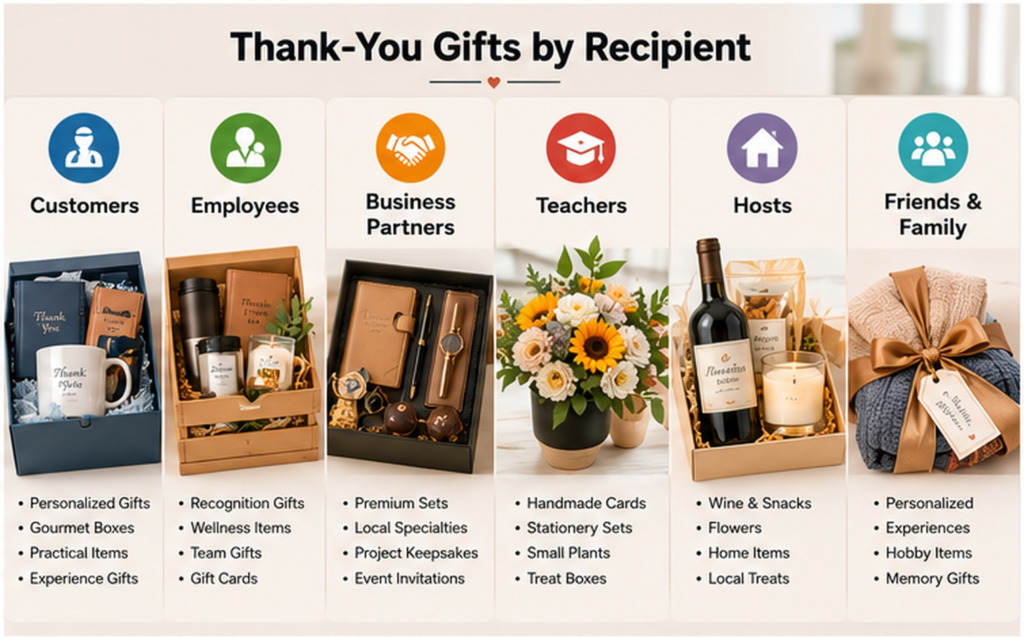
Thank-You Gifts for Employees
Employee appreciation should recognize specific contributions rather than simply distribute identical merchandise.
Useful ideas include:
- Recipient-choice rewards
- Personalized desk items
- Quality bags
- Technology accessories
- Food packages
- Professional-development opportunities
- Team experiences
- Wellness items
- Extra time off where appropriate
- Milestone keepsakes
When possible, explain exactly what the employee is being thanked for.
“You did a great job” is positive.
“Thank you for staying calm with the customer, identifying the shipping issue, and coordinating the replacement before the deadline” is much more meaningful.
Thank-You Gifts for Business Partners and Suppliers
Suppliers, contractors, referral partners, and other behind-the-scenes contributors are often overlooked.
Useful thank-you gifts include:
- Regional specialties
- Team-sharing gift boxes
- Travel accessories
- Quality office items
- Personalized project keepsakes
- Food and beverage packages
- Experience vouchers
- Charitable gifts
The message should recognize their specific contribution.
For example:
“Thank you for helping us keep production on schedule during an unusually difficult quarter.”
Thank-You Gifts for Teachers
Teacher gifts are often most successful when they are useful and modest.
Ideas include:
- Handwritten notes
- Bookstore gift cards where permitted
- Quality pens
- Personalized stationery
- Coffee or tea
- Classroom supplies
- Small plants
- Food gifts
- Tote bags
- Student-created memory books
Parents should check school rules before giving higher-value gifts.
A personal note describing how the teacher helped the student may become more meaningful than the purchased item.
Thank-You Gifts for Hosts
When someone invites you into their home, the gift should be easy for the host to receive.
Good options include:
- Flowers
- Chocolates
- Tea or coffee
- Bakery items
- Candles
- Olive oil
- Serving accessories
- Small home products
- Local specialties
Avoid giving food that requires the host to serve it immediately.
A host gift should reduce social pressure rather than create another task.
Thank-You Gifts for Friends and Family
Personal relationships allow more emotional and customized choices.
Consider:
- Photo books
- Personalized jewelry
- Shared experiences
- Favorite foods
- Books
- Hobby supplies
- Personalized home items
- Memory boxes
- Handmade gifts
- Planned meals
- Weekend activities
The strongest personal thank-you gifts often refer to something the recipient actually did.
A photo book may thank grandparents for years of support. A special dinner may recognize a friend who helped during a difficult move. A practical upgrade may thank a relative who regularly helps with childcare.
Thank-You Gifts by Occasion
After a Referral
A referral shows trust.
Good options include a handwritten card, local gift box, practical accessory, service credit, or modest personalized gift.
Business referral gifts should be clearly framed as appreciation unless they are part of a formal incentive program.
After Project Completion
Project completion is an excellent time for professional thank-you gifts.
Consider:
- Team-sharing food
- Personalized notebooks
- Project commemorative items
- Desk accessories
- Experience vouchers
- Local products
Mention the project directly in the card.
After Receiving Help
When someone gives time rather than money, useful or personal thank-you gifts are particularly appropriate.
Examples:
- Meal delivery
- Coffee gift
- Flowers
- Favorite snack
- Book
- Practical household item
- Experience together
The value does not need to match the value of the help mathematically.
Gratitude is not an invoice.
After a Major Purchase
Real estate agents, contractors, consultants, retailers, and service companies may use post-purchase gifts to complete the customer experience.
Ideas include:
- Home accessories
- Product-care kits
- Custom key holders
- Small tool sets
- Personalized items
- Local welcome gifts
- Food boxes
The gift should complement the purchase rather than push another sale.
After an Event
Speakers, volunteers, sponsors, planners, performers, and hosts can all be recognized after a successful event.
Useful gifts include:
- Personalized cards
- Event photographs
- Small keepsakes
- Local gift sets
- Books
- Experience vouchers
- Team gifts
Sending the gift after the event also gives you an opportunity to refer to specific moments.
Thank-You Gifts by Budget
Thoughtfulness and price are not the same thing.
| Budget | Thank-You Gift Ideas | Suitable For |
|---|---|---|
| Under $15 | Cards, snacks, flowers, small stationery, digital coffee | Teachers, neighbors, colleagues |
| $15–$40 | Drinkware, books, candles, notebooks, gift boxes | Customers, hosts, referrals |
| $40–$100 | Premium food, tech accessories, leather goods, experiences | Clients, employees, partners |
| $100–$250 | Personalized premium items, events, luxury gift sets | VIP clients, major milestones |
| $250+ | Bespoke products, premium experiences, major commemorative gifts | Long-term strategic relationships |
For businesses planning larger programs, Giftstin’s small-business corporate gifting guide includes additional budget ranges and occasion-based ideas. Corporate Gift Ideas for Small Businesses
Personalized Thank-You Gifts
Personalization does not need to mean engraving everything.
Useful personalization can include:
- Name
- Initials
- Important date
- Project name
- Location
- Favorite color
- Short message
- Photograph
- Shared joke
- Company milestone
- Personal interests
The best personalization adds meaning.
An employee’s name on a notebook is basic customization.
A notebook printed with the project name and completion date may tell a stronger story.
For corporate anniversaries and longer relationships, milestone-based personalization is particularly useful. Corporate Anniversary Gift Ideas for 2026
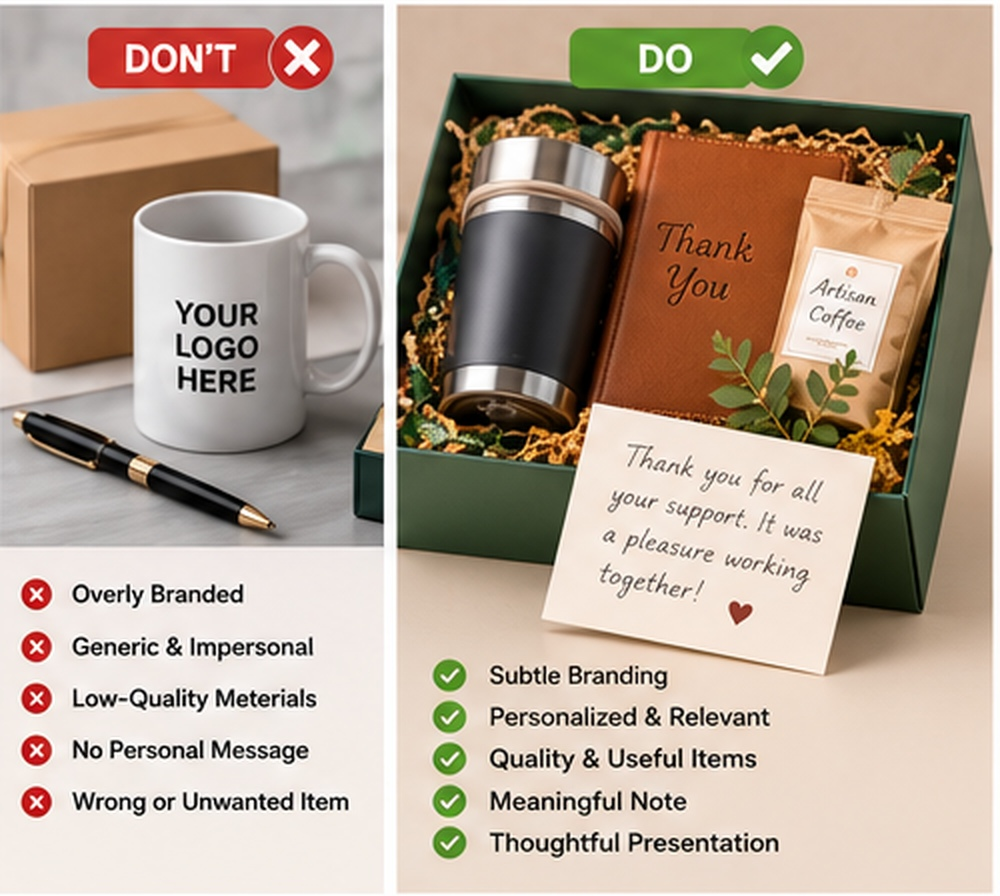
Keep Branding Subtle
For business thank-you gifts, large logos can quickly turn appreciation into marketing.
A better hierarchy is:
- Recipient
- Gift design
- Appreciation message
- Sender branding
Your logo can appear on the packaging, card, inside cover, or a small area of the product.
Material Gifts vs. Experience Gifts
Physical and experiential gifts solve different needs.
Physical Gifts Work Well When:
- The recipient values practical items.
- The product can be used repeatedly.
- You need something easy to ship.
- A personalized keepsake fits the occasion.
- The item relates to the recipient’s interests.
Experience Gifts Work Well When:
- The recipient prefers memories over objects.
- You know their interests.
- Scheduling is flexible.
- The experience is available locally or online.
- The relationship supports a more personal gesture.
Examples include:
- Restaurant meals
- Cooking classes
- Museum memberships
- Sports events
- Workshops
- Tastings
- Wellness experiences
- Tours
- Concerts
- Online courses
Research suggests experiential gifts can strengthen relationships particularly well because the emotional experience happens when the recipient uses the gift.
A hybrid approach can also work.
Send a small physical object that introduces the experience: a coffee cup with a tasting voucher, cooking tool with a class, or printed invitation with an event ticket.
Consumable Thank-You Gifts
Consumables are one of the safest options when you do not want to create clutter.
Consider:
- Coffee
- Tea
- Chocolate
- Bakery products
- Nuts
- Fruit
- Olive oil
- Spices
- Candles
- Flowers
- Personal-care products
Check dietary restrictions, allergies, fragrance sensitivity, alcohol rules, and shipping regulations.
For office teams, a shareable product may be more appropriate than a gift intended for one individual.
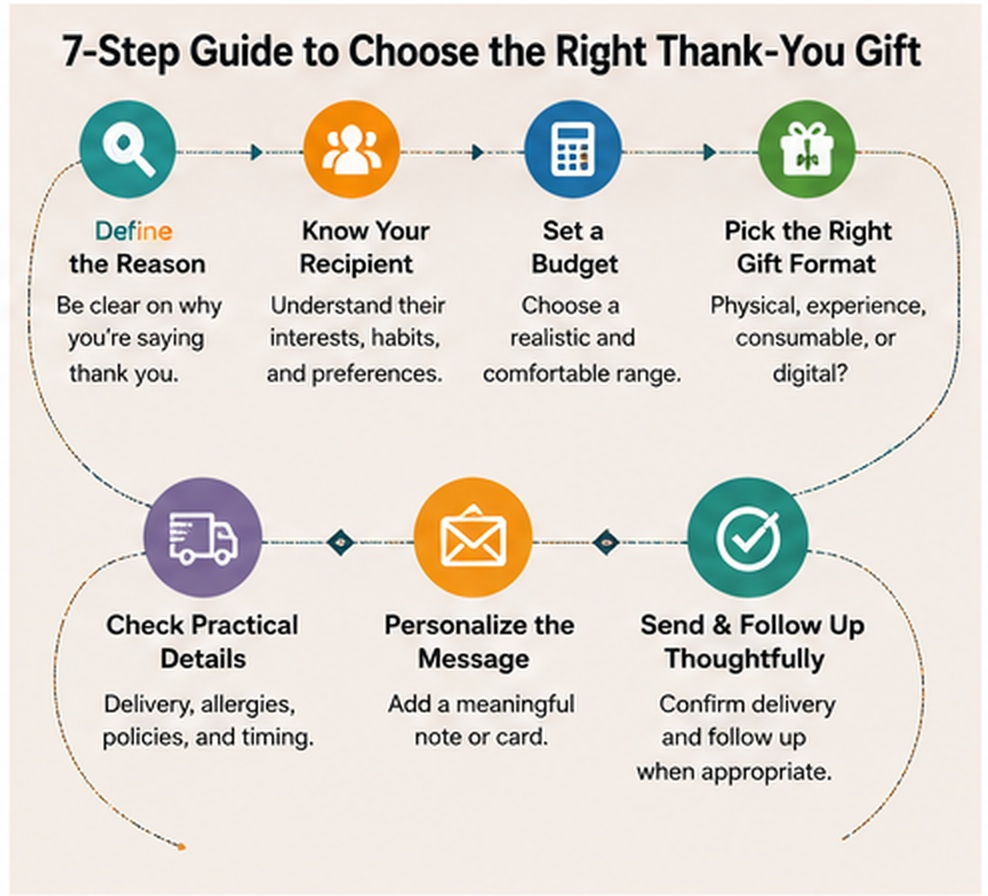
How to Choose the Right Thank-You Gift
Use this seven-step process.
Step 1: Define Why You Are Thanking Them
Write one sentence describing the reason.
If you cannot identify the reason clearly, the gift may feel generic.
Step 2: Consider the Relationship
Ask whether the relationship is new, established, personal, professional, formal, or informal.
This determines how personal and expensive the gift should be.
Step 3: Identify Three Recipient Clues
Write down three things you know about the recipient.
For example:
- Drinks coffee
- Travels frequently
- Prefers minimalist design
You now have a useful direction.
Step 4: Set the Budget
Choose a range before browsing.
This prevents price from becoming the decision-making process.
Step 5: Select the Format
Choose between:
- Physical product
- Experience
- Consumable
- Gift card
- Charitable gift
- Service
- Handmade gift
Step 6: Remove Friction
Check shipping, sizing, food restrictions, compatibility, delivery, and policies.
Step 7: Write the Message
The message should explain the gratitude in plain language.
Business Thank-You Gifts: Compliance and Tax Issues
Businesses should treat gifting differently from personal gifting.
Always check the recipient organization’s rules before sending gifts to government employees, procurement teams, regulated industries, healthcare professionals, financial organizations, or international public-sector contacts.
U.S. Department of Justice ethics guidance illustrates how strict government gift rules can be. Federal employees may be prohibited from accepting certain gifts from parties that seek business or official action from their agency.
International businesses should also consider anti-bribery requirements. The U.S. Foreign Corrupt Practices Act addresses offers or transfers of value intended improperly to influence foreign officials or obtain business advantages.
A sound business-gifting policy should include:
- Defined approval levels
- Recipient restrictions
- Spending limits
- Business purpose
- Accurate records
- Timing restrictions
- Guidance for government recipients
- Rules for cash equivalents
U.S. Business Gift Tax Deduction
The IRS states that businesses generally may deduct no more than $25 per person per tax year for business gifts, subject to its rules and exceptions. Certain incidental expenses such as qualifying packaging or shipping may be treated separately if they do not add substantial value to the gift.
This is a tax-deduction rule, not a universal legal limit on how much a business may spend.
Businesses should maintain records of the gift, amount, date, recipient, and business purpose and consult a qualified tax professional when necessary.
International Thank-You Gifts
Gift etiquette changes across countries and cultures.
Before sending an international thank-you gift, check:
- Appropriate value
- Colors
- Numbers
- Food customs
- Alcohol rules
- Religious considerations
- Business hierarchy
- Gift wrapping
- Import restrictions
- Local company policies
- Anti-bribery requirements
A gift that feels generous in one culture may feel excessive in another.
When uncertain, modest and practical gifts are usually safer than highly personal or expensive options.
Recipient-choice programs can also reduce risk.
Sustainable Thank-You Gift Ideas
A sustainable gift is not automatically one made from bamboo or recycled packaging.
Start by asking whether the recipient actually wants the item.
Useful strategies include:
- Durable products
- Minimal packaging
- Reusable packaging
- Local products
- Consumables
- Experiences
- Digital gifts
- Repairable products
- Recipient choice
- Charitable contributions
The most environmentally responsible product may be the one someone uses for ten years rather than the one with the most environmental claims on the box.
For bulk programs, also consider shipping distances, packaging volume, product lifespan, and how easily the recipient can reuse or dispose of the gift.
Common Thank-You Gift Mistakes
Choosing Something You Like
The recipient’s preferences matter more than yours.
Spending Too Much
A gift can create uncomfortable pressure when it is disproportionate to the relationship.
Spending Too Little on Presentation
An inexpensive gift can feel thoughtful when the packaging and message are carefully handled.
Adding Too Much Branding
A heavily branded product is usually merchandise, not appreciation.
Ignoring Allergies or Preferences
Food, fragrance, clothing, and alcohol require additional care.
Sending at the Wrong Time
A gift arriving weeks after an important event may lose some meaning.
Using the Same Message for Everyone
Templates improve efficiency, but one or two specific sentences make the message human.
Expecting Something in Return
A thank-you gift should not immediately be followed by a sales pitch, request for a review, or favor.
Building a Thank-You Gift Program for a Business
Businesses that send gifts regularly should create a simple system.
Create Trigger Moments
Possible triggers include:
- First order
- Fifth order
- Referral
- Renewal
- Project completion
- Anniversary
- Major customer milestone
- Useful feedback
- Service recovery
Create Several Gift Tiers
For example:
Tier 1: Card or small consumable
Tier 2: Personalized practical product
Tier 3: Premium gift or experience
This is easier to manage than choosing every gift from scratch.
Maintain Recipient Preferences
Record only appropriate information customers willingly share.
Helpful information might include:
- Preferred shipping address
- Food preferences
- General interests
- Gift category preference
- Whether they prefer physical or digital gifts
Avoid unnecessary or sensitive personal information.
Automate Reminders, Not Appreciation
Customer relationship management tools can help teams remember anniversaries, renewals, or project dates.
Technology should identify the moment.
Humans should decide what the moment means.
Frequently Asked Questions About Thank-You Gifts
What Is a Good Thank-You Gift?
A good thank-you gift is relevant, appropriately priced, easy to use, and connected to the reason for gratitude.
Books, food, personalized accessories, flowers, experiences, stationery, and useful everyday upgrades are all strong options.
How Much Should I Spend?
There is no universal amount.
Spend according to the relationship and occasion. A $15 gift can be highly appropriate for a helpful neighbor, while a major business partnership may justify a larger approved budget.
Is Cash a Good Thank-You Gift?
Cash may be appropriate in some personal situations but can feel transactional in others.
For businesses, cash and cash-equivalent gifts may also raise policy, tax, or compliance concerns.
Are Gift Cards Impersonal?
Not necessarily.
A gift card becomes more thoughtful when you select a store or experience relevant to the recipient and include a personal message.
What Should I Give Someone Who Has Everything?
Choose:
- An experience
- Consumable
- Charitable donation
- Personalized keepsake
- Service
- Time together
- Something connected to a shared memory
Should I Send a Thank-You Gift After Receiving a Gift?
It depends on the situation.
A sincere message is often sufficient. Gift exchanges should not become an endless obligation to reciprocate.
What Are Appropriate Business Thank-You Gifts?
Practical accessories, personalized stationery, food boxes, local products, experiences, recipient-choice gifts, and modest commemorative items are generally useful starting points.
Always check recipient policies first.
Final Thoughts: Appreciation Comes Before the Gift
The strongest thank-you gifts begin before anyone opens a box.
They begin with noticing what another person contributed.
A customer stayed loyal. An employee solved a difficult problem. A friend gave up an afternoon to help. A teacher encouraged a child. A supplier protected a deadline. A client trusted your judgment. A neighbor showed up when you needed them.
The gift simply gives that recognition a physical form.
Start with the reason. Understand the recipient. Set a suitable budget. Choose something relevant. Remove practical complications. Then write a message that explains what their contribution meant.
For personal relationships, prioritize emotional relevance.
For business relationships, combine thoughtfulness with appropriate policies, recordkeeping, and proportional value.
And when you are unsure what to buy, choose usefulness, flexibility, or an experience over novelty.
A successful thank-you gift should not make the recipient think, “This must have cost a lot.”
It should make them think:
“They remembered.”
For more business gifting ideas, explore Giftstin’s current small-business gifting guide. Corporate Gift Ideas for Small Businesses
External Sources
- Journal of Consumer Research — research on experiential gifts and relationship strength.
- Internal Revenue Service — current U.S. business-gift deduction guidance.
- U.S. Department of Justice — government gift rules and Foreign Corrupt Practices Act guidance.


